Taylor is one of Downriver's biggest suburbs — miles of brick ranches, tri-levels, and newer two-stories across a wide range of ages. That variety means every roof here gets judged on its own merits: a 1970s ranch with original shingles needs a different conversation than a 2000s two-story after a hailstorm. We diagnose first, photograph everything, and scope to what's actually wrong.
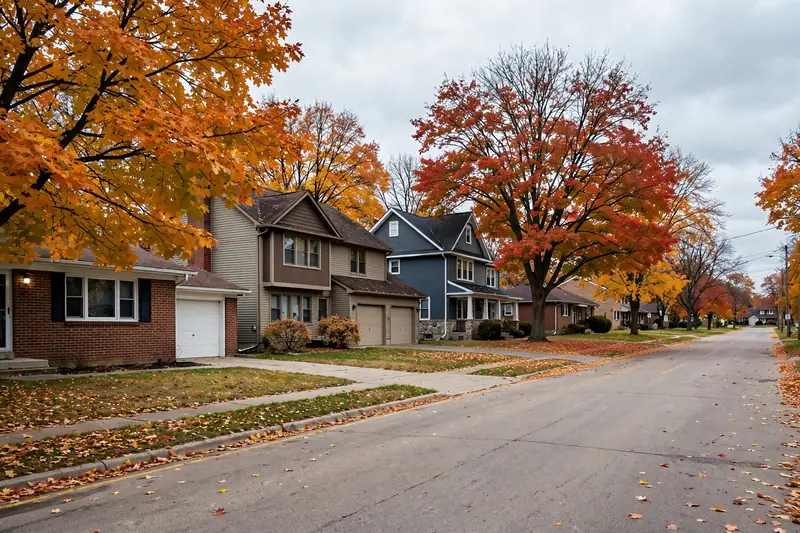
A real mix: post-war ranches in the older sections, 70s–90s tri-levels and colonials in the middle, and newer construction toward the edges. Roof complexity varies just as much — simple gables on the ranches, cut-up rooflines with valleys and dormers on the two-stories. Storm exposure is the common thread across all of it.
Wind and hail damage. Cause: open Downriver exposure to spring storms and summer hail cells. Effect: lifted tabs, bruised mats, and displaced flashing — sometimes obvious, sometimes hidden for months.
Aging shingles on older stock. Cause: 70s–90s roofs reaching end of life. Effect: granule shedding, brittle tabs, leaks at every penetration.
Valley wear on complex roofs. Cause: two-story rooflines funneling decades of water through the same valleys. Effect: valley lining failure and wide leaks during heavy rain.
Storm calls start with documentation — dated photos of every slope before anything is touched — so repairs and any insurance claim share the same evidence. Older roofs get the full age assessment: repair where there's life left, replacement quoted plainly where there isn't. Complex rooflines get careful valley and flashing work, not shortcuts. Written quote, photo record, clean site.
Documented, tarped, and repaired from a single call.
Every slope photographed before repair begins.
From 70s ranches to 2000s two-stories — scoped on merit.
Scope and price in writing before any work starts.
Photo-documented inspection. Written quote before work starts. The cheapest repair is the one you make now.
Call (313) 769-7896